






Women are essential to the UK workforce, yet they continue to face pay and employment inequalities. The gender pay gap currently stands at 6.9% for full-time roles, with women earning a median of 12.8% less per hour than men, according to the Office for National Statistics (ONS).
Research from the CIPD, the professional body for HR and people development, shows that workplaces and national policy are failing to properly support women’s health needs which can negatively impact their ability to stay in work, or achieve their true potential in the workplace.
For instance, a CIPD survey report – Workplace Support for employees experiencing fertility challenges - found that almost one in five (19%) employees experiencing fertility issues have considered leaving their job due to lack of support. Meanwhile, its Menopause in the Workplace report revealed that over half of women (53%) aged 40 to 60 experiencing menopause were able to recall a time when their menopause symptoms prevented them from going into work.
Also on in-Cumbria:
Health issues such as menopause, endometriosis, and severe period pain can not only have a significantly negative impact on women’s wellbeing, but also cost the UK economy nearly £11 billion every year in lost productivity and absenteeism, according to the NHS Confederation.
In response, the CIPD is urging businesses and the government to step up support for women’s health in the workplace, so more women can stay in work and progress in their careers.
Last year, the CIPD joined many other organisations in an open letter to the employment minister, calling on the government to help employers provide better workplace support for women’s health in relation to menopause, menstrual health, fertility challenges, and pregnancy and baby loss.
The letter, also backed by the Society of Occupational Medicine, asked for a review of workplace support for women’s health and reproductive challenges to identify opportunities to strengthen support, improve access to occupational health, and align workplace policies with women’s health needs.
In October 2025, the government announced it would be renewing the Women’s Health Strategy and the CIPD was invited to attend a roundtable exploring the priority areas to focus on in the workplace.
Rachel Suff, senior policy and practice adviser for wellbeing at the CIPD, says: ’Inadequate support for women’s health and reproductive challenges at work means many people feel forced to take sick leave or drop out of the workforce to manage their symptoms.
‘With supportive employer policies, better people management support and the opportunity to access specialist occupational health support, we can keep more women in fulfilling and productive work.
‘We need the government to play its part by reviewing where the gaps in support exist, supporting employers to develop flexible and compassionate workplaces, and widening access to occupational health services.’

Health is not the only factor holding women back at work. Women continue to shoulder the majority of unpaid caregiving responsibilities for children and older relatives, and balancing work with caring duties remains a major daily challenge for many.
This juggle often forces women to reduce their hours, take lower-paid roles, or step back from career progression altogether.
According to research from Carers UK, over half (59%) of the UK’s five million unpaid carers are women, and in its State of Caring Survey, 73% of carers in employment said they had found it stressful to juggle work and care. Nearly half (44%) of carers reduced their working hours to better balance their caring responsibilities, whilst a quarter (25%) of carers in employment had to take on a lower paid or more junior role.
These adjustments - and the resulting reduction in pay - can lead to financial strain and pressures.
Currently, under The Carers Leave Act - legislation which the CIPD helped to inform - carers are entitled to one week’s unpaid leave within any 12-month period.
But CIPD research shows that nearly half of UK employers (48%) either lack a formal carer’s leave policy (29%) or are unaware of having one in place (19%), which could mean many working carers are unaware of their eligibility for unpaid carers leave.
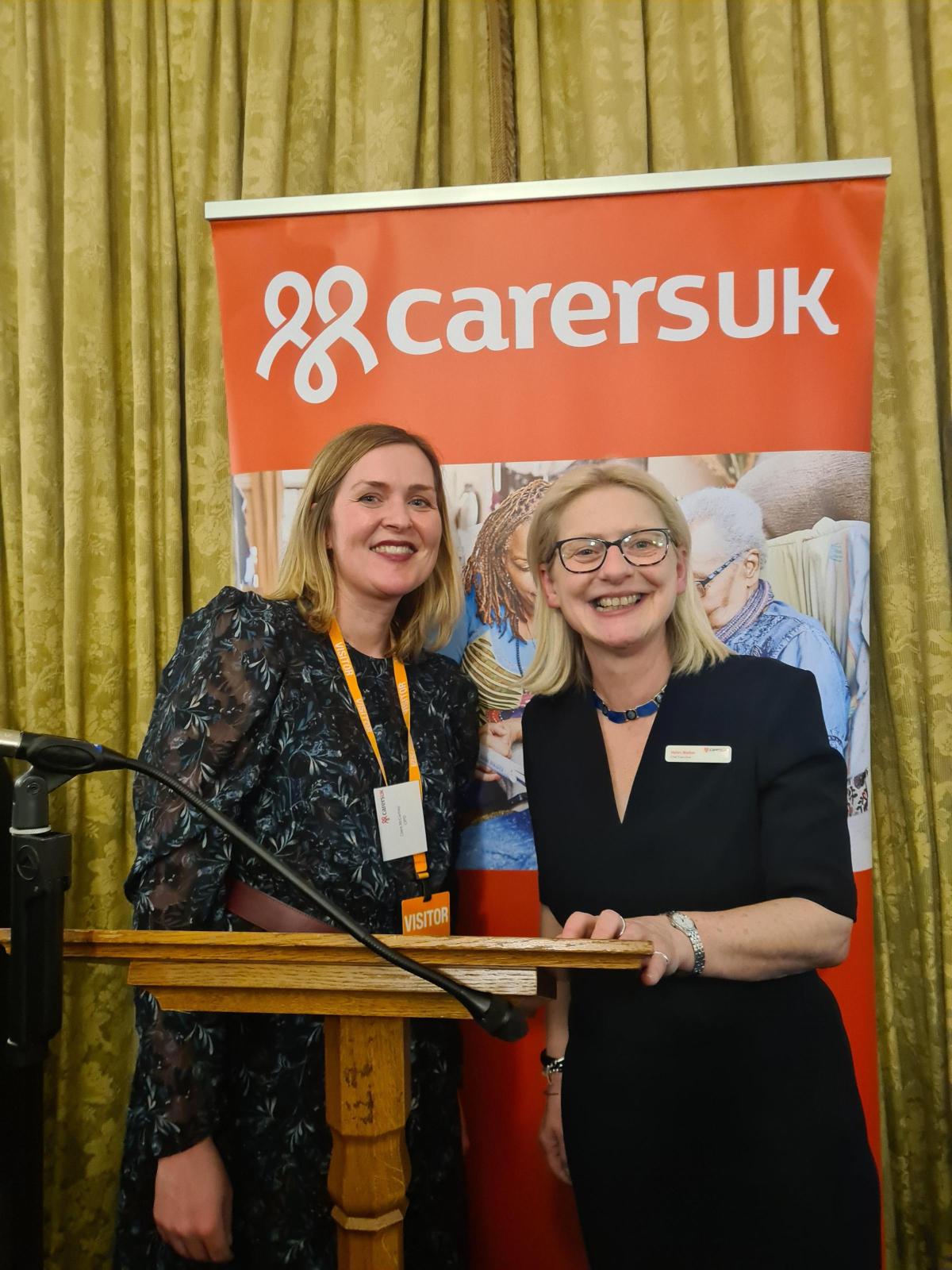
Claire McCartney, policy and practice manager at the CIPD says: ‘Employers should review their policies to ensure they are compliant and truly supportive of carers. It’s important they clearly communicate what support is available, too.
‘By offering carers greater flexibility and paid leave where possible, we can enable more people to remain in or return to work. It’s a win-win solution for everyone: improving performance, reducing public spending, and supporting families to achieve a better quality of life.’

Research from Carers UK estimates that a statutory right to five days of paid carer’s leave could benefit over two million working carers and deliver potential productivity gains of £8.2 billion a year for the UK economy. Currently, the cost of employees leaving work due to caring responsibilities is estimated at £1.3 billion annually.
The Government’s Employment Rights Act (ERA) 2025 aims to boost workers' rights and help more people stay in work and access support when they need it most. Through it, a number of important reforms are being introduced that should help working parents better balance and share caregiving responsibilities.
From April 2026, new parents will be able to take unpaid parental leave from day one of their employment, removing the existing one-year service requirement, giving around 1.5 million parents greater flexibility. The 26-week service requirement for paternity leave will also be abolished, allowing fathers and partners to take paternity leave from their first day at work.
McCartney says: ‘The changes to unpaid parental leave and paternity leave will provide more access, fairness and flexibility for working parents. It’s important that these changes are reflected in policies and clearly communicated to managers and employees. Organisations will also need to think about different ways of covering leave, such as providing development opportunities for other members of staff.’
As part of the Government’s ongoing review of Parental Leave and Pay, the CIPD has also called for statutory paternity leave to be increased from one or two consecutive weeks to six weeks, paid at or near the full rate of pay, to further support greater equality in caregiving responsibilities.
The Equality and Human Rights Commission has said that flexible working is the ‘primary way’ to close the gender pay gap. But last year, over one million UK workers left their jobs because they lacked access to flexible working options.
The research from CIPD’s Flexible and Hybrid Working Practices in 2025 report, based on a survey of 2,000 employers and 5,000 employees, found that just over half of organisations (51%) require employees to be on-site a minimum number of days per week - typically three - while 14% enforce a set number of office days per month.
McCartney comments: ‘If we are to help more women stay in work and achieve their potential - not to mention meet the challenges of an ageing population and the rising number of carers - employers must think more creatively around flexible working.
‘Compressed hours, job sharing, and term-time working can help people achieve a better work-life balance and support employer efforts to recruit and retain staff, while also building a more equal and inclusive workforce for the future.’

From 2027 – under the Employment Rights Act (ERA) 2025 – employers will only be able to refuse a flexible working request if it is reasonable for them to do so; and must explain in writing the specific ground(s) for refusal and why they consider refusal on that ground(s) to be reasonable.
McCartney adds: ‘There are substantial business benefits in ensuring women thrive and progress in the workplace. They should not be forced to step back from their careers or leave work due to a lack of flexibility or support. Employers must step up and make 2026 the year they find the right balance to attract, retain, and enable more women to thrive at work.’


Share